Short-Term Rental Income Tax Turkey Danıştay Decision


Short-term platform rentals: GMSİ vs. Commercial income under Turkish tax regulations.
Key Takeaways
- The Council of State (Danıştay 3. Daire) has affirmed that short duration (daily/weekly) and guest multiplicity do not automatically convert rental yields into *commercial income*.
- Classification as a commercial enterprise requires an organized commercial structure accompanied by continuous hotel services such as daily cleaning, meals, or reception staff.
- Holding a Tourism Rental Permit under Law No. 7464 is a regulatory compliance measure and does not legally mandate commercial tax status in the absence of hospitality services.
- Taxpayers facing retroactive commercial tax and penalty assessments must file an annulment lawsuit in the Tax Court within 30 days of notification to stay enforcement and protect their rights.
Daily Home Rentals via Digital Platforms: Commercial Earnings vs. Immovable Property Rental Income (GMSİ) Under Turkish Tax Law
The rapid expansion of short-term residential leasing through global platforms such as Airbnb and Booking has introduced significant friction between property owners and the Turkish Revenue Administration (Gelir İdaresi Başkanlığı - GİB). In legal practice, thousands of individual property owners who merely intended to monetize their real estate on a short-term basis have received ex officio tax assessments (re’sen tarhiyat). These notices often allege that daily or weekly rentals automatically constitute a commercial enterprise rather than ordinary immovable property rental income (gayrimenkul sermaye iradı - GMSİ).
The resulting tax implications are severe: retroactive tax loss penalties (vergi ziyaı cezası), value-added tax (VAT / KDV) assessments, provisional tax obligations (geçici vergi), accommodation tax claims (konaklama vergisi), and special irregularity fines (özel usulsüzlük cezası).
However, recent landmark jurisprudence—most notably the Council of State’s 3rd Chamber decision (Danıştay 3. Dairesi, dated 19.11.2024, E.2023/5053, K.2024/5994)—has fundamentally reshuffled the administrative tax landscape. This article examines the statutory boundary between commercial earnings and GMSİ, explores judicial standards established by the Council of State, and outlines the procedural remedies available to affected property owners.
1. The Statutory Conflict: Commercial Earnings (Art. 37) vs. Rental Income (Art. 70)
Under Turkish Income Tax Law No. 193 (Gelir Vergisi Kanunu - GVK), the classification of income governs both the reporting regime and the resulting tax burden:
- Immovable Property Rental Income (GMSİ - GVK Art. 70): Covers passive revenue derived from the lease of immovable assets. Under this regime, natural persons report their total rental income annually in the subsequent calendar year’s March tax return, choosing between actual expense deductions or the statutory lump-sum expense method (götürü gider). Individual leases generally do not require VAT registration, bookkeeping, monthly declarations, or commercial invoicing.
- Commercial Earnings (Ticari Kazanç - GVK Art. 37): Captures revenue originating from continuous commercial, industrial, or professional organizations. If an individual’s rental activity is classified as commercial, they must maintain formal statutory books, issue invoices, withhold applicable taxes, submit monthly VAT returns, pay quarterly provisional taxes, and potentially remit accommodation taxes.
+------------------------------+------------------------------------+------------------------------------+
| Legal Factor                 | Immovable Property Rental (GMSİ)   | Commercial Income (Ticari Kazanç)  |
+------------------------------+------------------------------------+------------------------------------+
| Statutory Basis              | GVK Article 70                     | GVK Article 37                     |
| Bookkeeping / Invoicing      | None (Standard Banking Trail)      | Compulsory Statutory Books/Invoice |
| VAT (KDV) & Accom. Tax       | Generally Exempt / Inapplicable    | Subject to VAT & Accom. Tax        |
| Filing Schedule              | Annual Declaration (March)         | Monthly, Quarterly, & Annual       |
| Organization Threshold       | Passive asset exploitation         | Labor, capital & ancillary service |
+------------------------------+------------------------------------+------------------------------------+
The friction arises because tax authorities frequently view the frequency of bookings and the short duration of each stay (daily or weekly) as an automatic indicator of commercial continuity (devamlılık) and commercial organization (ticari organizasyon).
2. Regulatory Background: Law No. 7464 and Administrative Overreach
On January 1, 2024, Law No. 7464 on the Rental of Residential Properties for Tourism Purposes entered into force. The statute established a regulatory framework requiring residential property owners renting for 100 days or fewer to obtain a “Tourism Rental Permit” (Turizm Amaçlı Kiralanan Konut İzin Belgesi) from the Ministry of Culture and Tourism.
Following this statutory enactment, the tax administration issued administrative directives contending that holding a tourism rental permit established an irrefutable legal presumption of commercial organization. In our tax litigation practice, tax inspection boards routinely opened retrospective tax inspections based merely on the possession of an izin belgesi or electronic transaction records received from digital platforms.
[PRO-TIP: Holding a short-term rental permit under Law No. 7464 is a regulatory and administrative requirement for public order, but according to prevailing judicial precedents, administrative licensing alone does not unilaterally convert passive civil rental income into commercial earnings under tax law.]

3. The Watershed Jurisprudence: Danıştay 3rd Chamber Decision
The Council of State (Danıştay) addressed the tax administration’s practice of automatically reclassifying short-term rentals as commercial activities. In its landmark ruling of November 19, 2024 (Danıştay 3. D., E.2023/5053, K.2024/5994), the 3rd Chamber demarcated the explicit boundary between commercial enterprise and civil asset management:
Core Legal Tenet: Commercial Organization vs. Civil Exploitation
The High Court emphasized that:
- Brevity and Multiplicity: The mere fact that rental agreements are short in duration (daily, weekly, monthly) and that multiple transactions occur across a calendar year cannot, on its own, transform income from GMSİ into commercial earnings.
- The Necessity of Ancillary Hotel Services: To substantiate a commercial enterprise (pansiyonculuk/otelcilik), the rental must involve an institutional organization offering supplementary guest services. Typical ancillary services include:
- Daily room cleaning and linen changes during the stay,
- Breakfast, catering, or dining services,
- Dry cleaning, ironing, or concierge operations,
- On-site staff dedicated to guest services.
- Passive Asset Monetization: A citizen utilizing a digital platform to lease real estate merely to maximize personal rental yields—without providing hospitality services beyond standard turnover preparation—is exercising basic property rights under Turkish Code of Obligations (Türk Borçlar Kanunu) rules of ordinary lease.
Furthermore, Danıştay issued stay-of-execution rulings against administrative directives that sought to systematically tax permit holders as automatic commercial operators, reaffirming that the principle of legality in taxation (vergide kanunilik ilkesi) under Article 73 of the Constitution prohibits creating substantive tax liabilities purely through administrative interpretations.
4. Administrative Inspections, Penalties, and Retrospective Assessments
When tax offices classify short-term platform leasing as a commercial business, property owners typically encounter a multi-tiered administrative assessment:
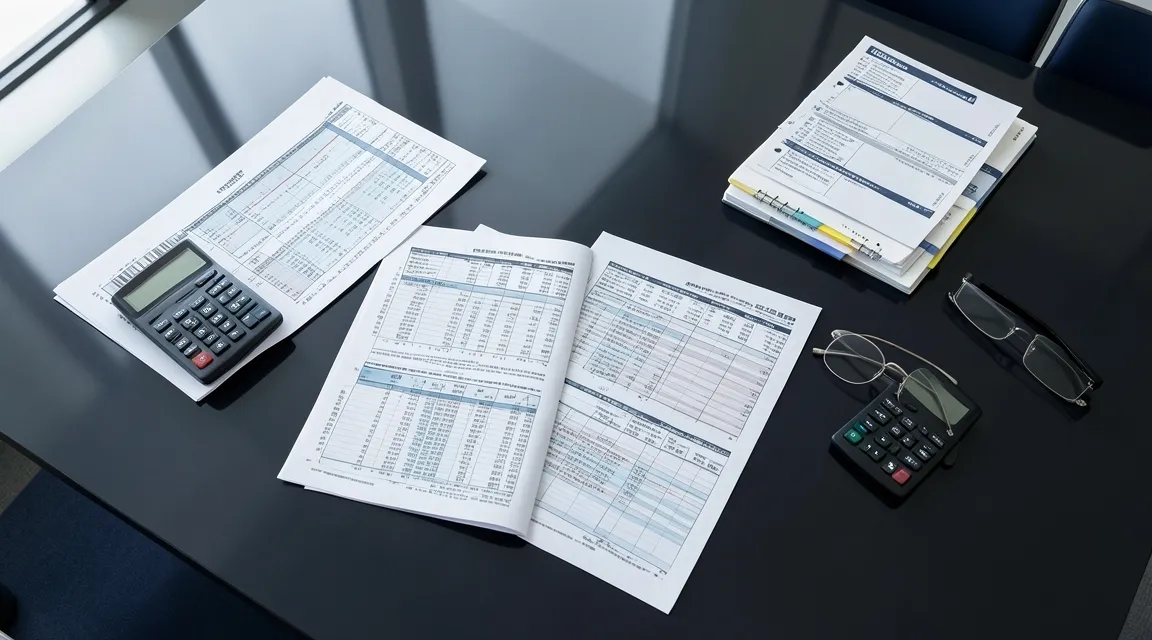
- Ex Officio Income Tax Tarhiyat: The administration estimates retroactive net income and taxes it according to progressive commercial income tax brackets.
- Value Added Tax (KDV): Because commercial service provisions fall within the scope of KDV Law No. 3065, tax offices assess retrospective VAT at the standard applicable rates.
- Provisional Tax (Geçici Vergi): Assessments for unfiled quarterly commercial advances.
- Tax Loss Penalty (Vergi Ziyaı Cezası): Under Article 344 of the Tax Procedure Code (VUK), a penalty equivalent to one fold (100%) of the unpaid taxes is typically added.
- Special Irregularity Penalties (Özel Usulsüzlük): Imposed pursuant to VUK Article 353 for failure to issue formal commercial invoices and maintain statutory commercial books.
[PRO-TIP: A common pitfall we observe in administrative audits is taxpayer passivity. Taxpayers who receive an audit invitation or a statement request (izaha davet) must clearly establish in writing that no on-site services, staff, or hotel infrastructure were provided, substantiating the purely passive nature of the tenancy.]
5. Procedural Remedies: How to Contest Unlawful Tax Assessments
Property owners served with a Tax and Penalty Notice (Vergi/Ceza İhbarnamesi) must strictly manage statutory procedural deadlines to prevent the assessment from becoming final and enforceable.
Procedural Timeline for Challenging Tax Assessments:

[Receipt of Tax/Penalty Notice]
               │
               ├─────────────────────────────────────────────┐
               ▼ (Within 30 Days)                            ▼ (Within 30 Days)
   [Filing Tax Court Lawsuit]                     [Administrative Settlement (Uzlaşma)]
   - File under İYUK Art. 7                       - Apply under VUK Art. 376 / Uzlaşma
   - Automatic stay of tax collection             - Waives court action if settled;
   - Evidentiary submission on lack of services   - Must file suit within 15 days if talks fail
Step 1: Evaluating Litigation vs. Settlement (Uzlaşma)
Under the Tax Procedure Code, an assessee has 30 days from the date of formal notification (tebligat) to either:
- Apply for an administrative settlement (Uzlaşma) under VUK provisions, or
- File a contentious administrative lawsuit before the competent Tax Court (Vergi Mahkemesi).
In disputes turning on substantive legal classification—such as whether income is commercial or GMSİ under Danıştay precedents—settlement panels often lack the jurisdiction to alter the underlying character of the tax category. Litigation before the Tax Court is generally the standard avenue to seek full annulment of the assessment.
Step 2: Drafting the Annulment Petition (İptal Davası)
Under Article 7 of the Administrative Jurisdiction Procedure Law (İYUK No. 2577), the cancellation lawsuit must be filed within the 30-day statutory limitation period.
The petition should incorporate:
- Clear reference to Danıştay 3. Dairesi (E.2023/5053, K.2024/5994) and related high-court jurisprudence establishing that short duration and tenant volume do not trigger commercial classification.
- Evidentiary proof confirming the absence of an organized enterprise: no employees, no daily cleaning contracts, no breakfast or food catering arrangements, and no physical front-desk facilities.
- Demonstration that the lease represents standard civil management of private property aimed at obtaining passive rent.
Step 3: Automatic Stay of Execution in Tax Courts
Under Article 27 of İYUK, filing an annulment action against income tax, VAT, and penalty notices in the Tax Court automatically stays the administrative execution and collection of the contested tax as a matter of law, shielding the owner from attachment or asset freezing while the merits are reviewed.

6. Strategic Compliance and Risk Management for Property Owners
To minimize exposure to mischaracterization by tax inspection units, property owners utilizing short-term platforms should implement proactive operational safeguards:

- Contractual Transparency: Standardized digital or physical rental terms should explicitly state that the agreement is an ordinary residential sublease or tenancy governed by the Turkish Code of Obligations, excluding auxiliary hotel operations.
- Accounting Delineation: Keep strict separation between cleaning service arrangements and the rental contract. Cleaning conducted strictly between check-outs should be documented as turnover maintenance rather than in-stay guest service.
- Timely GMSİ Declarations: Ensure that all gross earnings derived from short-term platforms are fully and accurately disclosed in the annual March GMSİ declaration. Demonstrating transparency in declaring rental income undermines administrative claims of tax evasion or intentional non-compliance.
- Professional Legal Review: Upon receipt of any audit communication or electronic notification from the tax administration, seek qualified legal counsel immediately to preserve evidentiary positions. When navigating contentious inspections, intricate procedural deadlines, or substantial penalty assessments, Contact EG Law Firm for Professional Legal Assistance to ensure robust administrative representation and protect your property assets.
Conclusion: Securing Rights in Short-Term Rental Taxation
The convergence of digital platform economies with traditional tax doctrines has produced friction between citizens and tax authorities. The landmark rulings from the Council of State clarify that the state cannot convert civil property management into a commercial enterprise without objective evidence of a commercial business organization or ongoing hotel-style amenities.
Property owners facing retroactive commercial tax assessments, VAT impositions, or tax loss penalties should examine the evidentiary foundations of their case. Preserving lease records, demonstrating the passive nature of the income, and meeting statutory court deadlines are decisive steps in defending against unlawful tax tarhiyats.
Legal Disclaimer: This publication is provided for general informational purposes only and does not constitute formal legal counsel or create an attorney-client relationship. Tax and administrative matters require individualized factual, statutory, and evidentiary assessment by a qualified attorney.
Frequently Asked Questions (FAQ)
Does renting an apartment on Airbnb automatically make me a commercial business under Turkish tax law?
No. According to prevailing jurisprudence, including Danıştay 3. Dairesi (E.2023/5053, K.2024/5994), renting residential property via digital platforms on a daily or weekly basis does not automatically constitute a commercial activity (ticari kazanç). Unless the owner provides an ongoing commercial organization with ancillary hotel services (such as daily cleaning, breakfast, or laundry), the earnings are generally classified as immovable property rental income (gayrimenkul sermaye iradı - GMSİ).
What additional services convert a short-term rental into commercial income?
Courts and administrative standards evaluate whether hotel-type services are provided during the stay. If the host provides daily housekeeping, room-service meals or breakfast, on-site reception personnel, or linen laundering during occupancy, the operation transitions from a passive lease into a hospitality business subject to commercial tax rules.
What should I do if the tax office issues a retroactive tax penalty notice for my short-term rentals?
You must act within the strict 30-day statutory limitation period from the date of formal service under Article 7 of the Administrative Jurisdiction Procedure Law (İYUK). You have the right to either apply for administrative compromise (uzlaşma) or file a cancellation lawsuit directly before the competent Tax Court (Vergi Mahkemesi). Filing a lawsuit before the Tax Court automatically stays the collection of the contested tax.
Does obtaining a Tourism Rental Permit under Law No. 7464 prove commercial activity?
No. The Tourism Rental Permit (Turizm Amaçlı Kiralanan Konut İzin Belgesi) is a regulatory requirement established for public safety and administrative tracking. While tax authorities previously attempted to treat the permit as automatic proof of commercial activity, high-court rulings have established that regulatory permits do not supplant the substantive definitions of the Income Tax Law.
Am I required to charge VAT (KDV) and Accommodation Tax on residential platform rentals?
If the rental constitutes immovable property rental income (GMSİ), individual residential leases are generally outside the scope of commercial VAT and accommodation tax obligations. If, however, the rental is determined to operate as a commercial enterprise with hotel-style amenities, both VAT and the 2% accommodation tax apply.